
This guide covers the Android application that is available today. Nextcloud Native is alpha software, so keep another copy of important data and read the known limitations for the exact release before relying on sync or backup. iPhone and iPad builds are not available yet.
Step 1 Connect your account and confirm the Android app is online
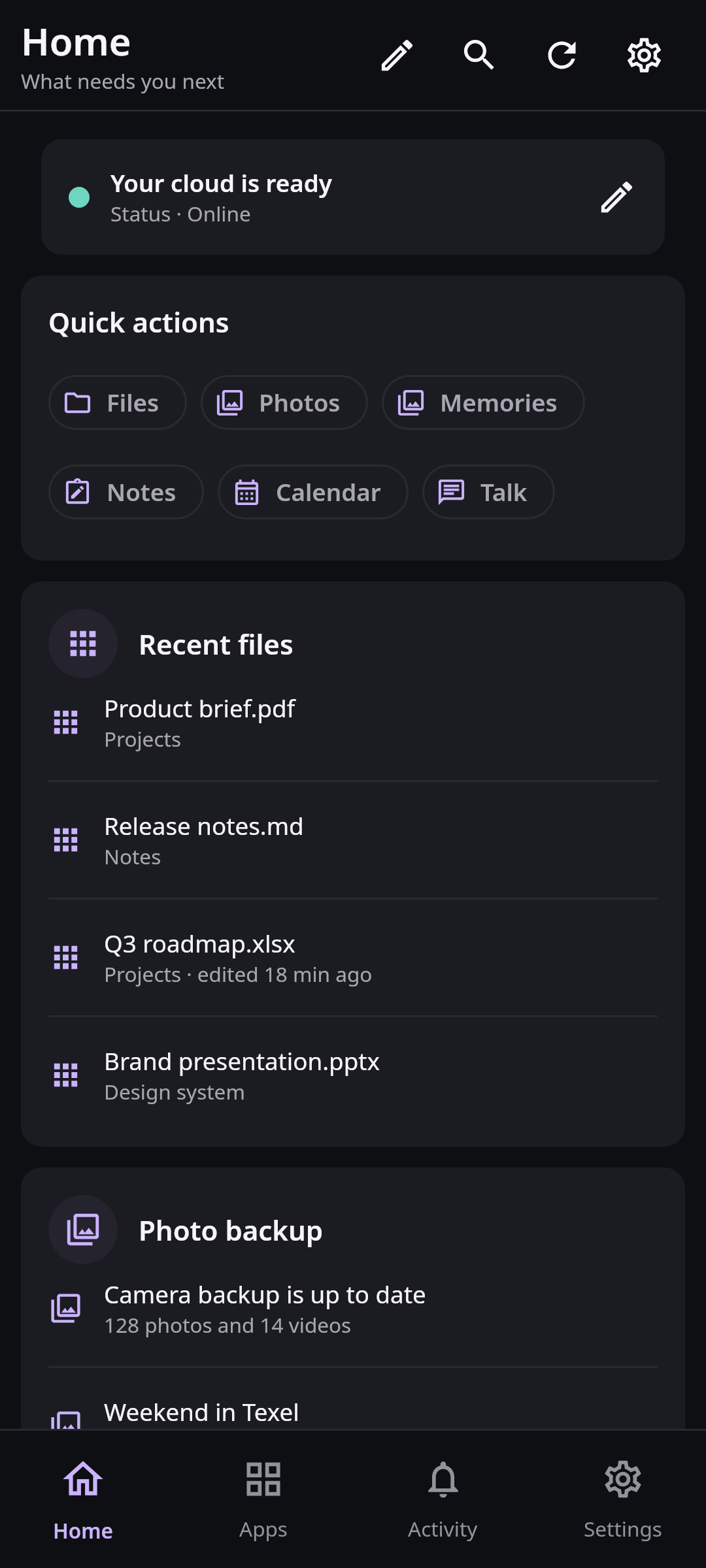
The Android Home screen confirms that Login Flow completed and summarizes real work from the connected Nextcloud account. Real Compose UI Next: Open Files and decide what must be stored on the phoneInstall the signed APK from the project's GitHub Releases page. Android 8.0 or newer is required. Open the app, enter the full
https://address of your Nextcloud server, and continue to the server's trusted Login Flow page. Sign in there and approve the app-password request; do not paste your primary password into Nextcloud Native itself.After the browser returns to the app, Home should show your account and an online or offline status. An offline status can be temporary, but it means new server data cannot be confirmed. If connection fails, check the complete server address, open the server in a browser to confirm its certificate is trusted, and retry. Do not work around certificate warnings.
Step 2 Open Files and decide what must be stored on the phone
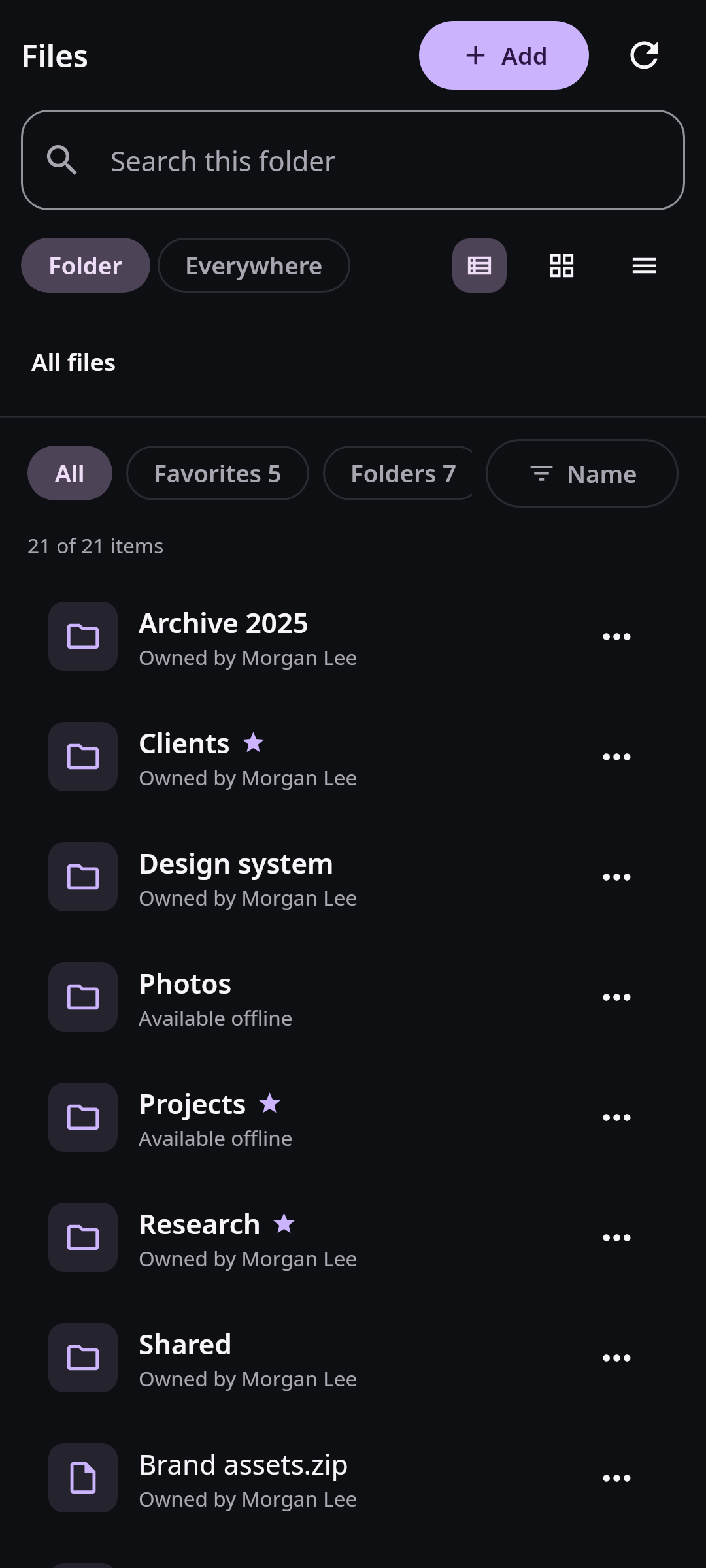
Files keeps cloud visibility separate from offline availability, so seeing a file does not imply that its original bytes are already on the device. Real Compose UI Next: Check device permissions and open a native workspaceOpen Files from Home or the app navigation. Browse into a folder and use an item's menu for actions such as previewing, sharing, or making a file available offline. A thumbnail or previously viewed preview can be cached even when the original is still online-only. Wait for the available-offline state before testing without a connection.
Nextcloud Native also appears in Android's system Files app while the account is connected. Opening a cloud file there downloads and caches a complete generation. Local edits are retained for guarded writeback; if the server changed first, the app records a conflict instead of silently replacing the newer remote file.
Step 3 Check device permissions and open a native workspace
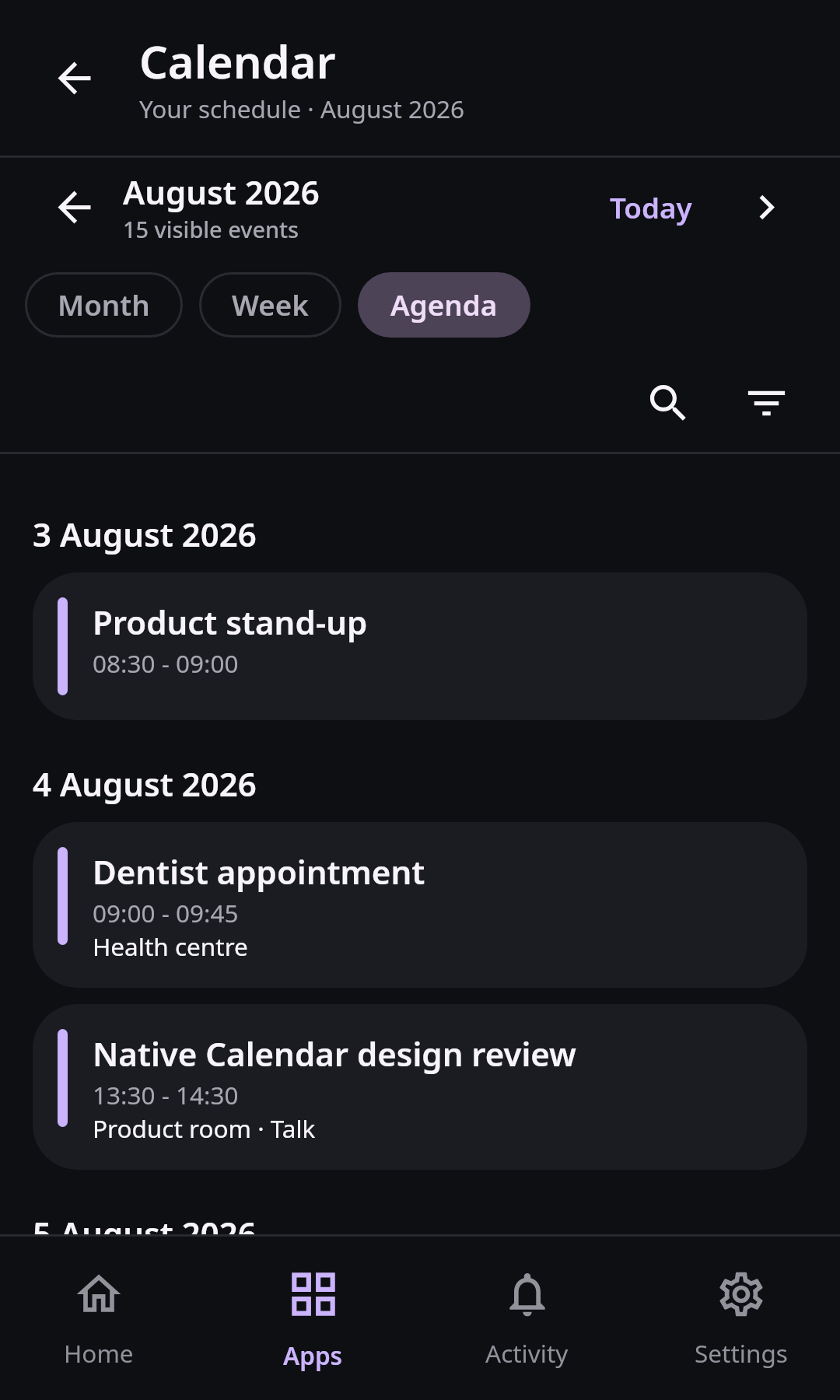
Android workspaces use phone-specific navigation and controls; Calendar is one example of a native surface rather than an embedded server web page. Real Compose UI Open Settings and review Device features. Grant only permissions needed for the workflow you choose. Notifications, files and media, or media-library access can remain unavailable until a feature requests them. If Android reports a permission as blocked, use the Settings action to review it in the operating system.
Return to the app list and open a workspace such as Calendar, Photos, Talk, or Notes. Support varies by installed server app and version: some surfaces are complete, while adaptive or read-heavy views may expose fewer actions. The app should explain unsupported behavior rather than opening the server's web interface. Use Android system Back to leave nested content and return to the previous workspace state.
If you need to report a failure, open Settings, then Diagnostics. You can add reproduction steps and explicitly share a bounded, anonymized support report. The report stays local until you choose to share it; review it before sending it anywhere.